
A bench comprising Justices J B Pardiwala and R Mahadevan said, "He (the governor) seems to have adopted his own procedure. He says, 'I withhold assent, but I will not ask you to reconsider the bill'. It does not make sense to keep withholding assent and not send it to the legislature, thereby frustrating the provision of Article 200."

A division bench of the Madras high court on Tuesday expunged the adverse remarks made by a single judge against top Tamil actor Vijay on the issue of entry tax over the import of a luxury car from England in 2012.

Solicitor General Tushar Mehta, the Centre's key counsel in defending the abrogation of Article 370 of the Constitution, said on Monday the Supreme Court verdict upholding the government's August 5, 2019, decision will go down in history as the one that corrected a "Himalayan constitutional blunder" of gigantic proportions.
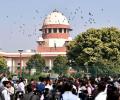
Justice Gavai's comment came while the apex court bench, also comprising Justice Augustine George Masih, was considering a fresh plea seeking an inquiry into the recent violence in West Bengal during anti-Waqf law protests.
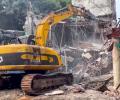
The Supreme Court of India has criticized the Uttar Pradesh government and Prayagraj Development Authority for the demolition of homes in the city, calling the actions "inhuman and illegal." The court ordered the authority to pay Rs 10 lakh compensation each to the homeowners, stating that the demolitions were carried out in a "high-handed" manner without following due legal process. The petitioners, whose homes were demolished, argued that the state government wrongly believed the land belonged to gangster-politician Atiq Ahmed. The Allahabad High Court had previously rejected their plea challenging the demolition.

The Supreme Court of India on Tuesday questioned the issue of using "spyware against terrorists" and stated that any report touching upon the country's "security and sovereignty" won't be made public. The court indicated it might address individual concerns regarding privacy breaches, but the report of the technical committee would not be a document for public discussion. The court will examine the extent to which the report can be shared publicly. The court's statement came during a hearing on a petition related to the alleged use of Pegasus spyware for surveillance. The court also emphasized that "having spyware is not wrong, against whom you are using is the question" and that the security of the nation cannot be compromised. The hearing has been adjourned to July 30.

'The ruling does not automatically mean that your house can be taken away, but suppose it blocks an expressway or a highway or such essential development, then it can be taken away as long as there is a law to support that action.'
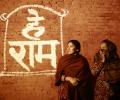
The bench will be headed by Chief Justice Ranjan Gogoi and also comprise of Justices S A Bobde, N V Ramana, U U Lalit and D Y Chandrachud.
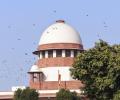
The Indian government defended the Waqf (Amendment) Act, 2025 in the Supreme Court, arguing that waqf, while an Islamic concept, is not an essential part of Islam. Solicitor General Tushar Mehta stated that waqf is essentially charity, which is recognized across religions, and cannot be considered a fundamental tenet of any faith. He also argued that the amended law addresses secular aspects of waqf and activities unrelated to Islam, and that "waqf by user" does not grant ownership of public land. Mehta highlighted the extensive consultations involved in the bill's creation, including feedback from various stakeholders. The hearing will continue on Thursday.

The Bombay high court on Wednesday said the Maharashtra government has not taken vindictive action against any person for re-sharing or re-uploading stand-up comic Kunal Kamra's video in which he indirectly passed a 'traitor' jibe at Deputy Chief Minister Eknath Shinde.

Chief Justice of India Justice B R Gavai on Friday praised Justice Bela M Trivedi for her career trajectory from the subordinate judiciary all the way up to the Supreme Court, where she became the eleventh woman judge to be appointed in its history.
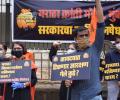
Economically Weaker Sections (EWS) have been given 10 per cent quota in admissions and jobs out of 50 per cent general category seats for the first time without eroding the "totally independent" reservation for SCs, STs and OBCs, the Centre told the Supreme Court on Tuesday.
The Supreme Court will hear a plea on Friday seeking a direction to Delhi Police to lodge an FIR over the alleged discovery of semi-burnt stash of cash from the official residence of High Court judge Yashwant Varma. The plea was filed by lawyer Mathews J Nedumpara and three others on Sunday. It challenges the 1991 judgement in the K Veeraswami case, in which the top court ruled that no criminal proceedings could be initiated against a judge of the high court or the top court without the prior nod of the Chief Justice of India. The alleged cash discovery happened following a fire at Varma's Lutyens Delhi residence on March 14, prompting the fire officers to rush to the spot. A Supreme Court-appointed in-house committee visited the residence of Justice Varma on Tuesday to commence its inquiry in the matter. Justice Varma denounced any insinuation and said no cash was ever placed in the storeroom either by him or any of his family members.

He asserted that the concept of 'one flag, one prime minister, one Constitution' was not a political slogan and the Bharatiya Janata Party firmly believes in the principle and finally implemented it with regard to Jammu and Kashmir.
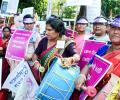
The Supreme Court has allowed the parents of the RG Kar Medical College rape and murder victim to pursue their plea for a further court-monitored CBI probe into the incident before the Calcutta High Court. The parents had expressed dissatisfaction with the CBI's initial probe and sought a more thorough investigation. The court, without making comments, disposed of the application, allowing the parents to continue the proceedings before the high court. The case has also prompted the Supreme Court to consider recommendations for preventing gender-based violence and developing safety protocols for medical staff at hospitals across the nation.

Justice Nazeer, along with then Chief Justice of India J S Khehar, was in minority in the 'triple talaq' judgement which was delivered in August 2017.

The Bombay High Court has allowed the police investigation against comedian Kunal Kamra over his remarks against Maharashtra Deputy Chief Minister Eknath Shinde to continue, but has barred his arrest. The court said the investigation can continue, but Kamra will not be arrested during the pendency of the petition. The court also said that if the police wanted to record Kamra's statement, they shall do so in Chennai, where he currently resides, after giving him prior notice.
People must have tolerance for each other's opinion at a time when the tolerance level has gone down internationally, Supreme Court judge Justice Sanjay Kishan Kaul said on Friday.

The Supreme Court of India has emphasized the importance of individual liberty, setting aside a Himachal Pradesh High Court order that cancelled bail for an accused in an attempt-to-murder case. The Supreme Court found no material to support the cancellation, stating that courts should be cautious about interfering with an individual's freedom.
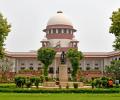
The Supreme Court will hear a plea seeking an independent selection process for the Comptroller and Auditor General of India (CAG) on March 17. The PIL, filed by the Centre for Public Interest Litigation, argues that the current system of appointment solely by the executive and the prime minister violates the Constitution and undermines the CAG's independence. The petition calls for a transparent process involving the prime minister, Leader of the Opposition, and Chief Justice of India. The PIL contends that the CAG's role as a watchdog over government finances requires a fair and non-arbitrary appointment procedure.
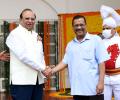
The Supreme Court of India on Wednesday postponed the hearing of its five-judge Constitution bench on the legal issue concerning the scope of legislative and executive powers of the Centre and Delhi government over control of services in the national capital.

In a setback to the Centre, the Supreme Court on Thursday held that states have the legislative competence to impose taxes on mines and minerals-bearing lands under the Constitution.

The top court issued notices to Union ministries of law and justice and minority affairs as well as the National Commission of Women after taking note of the plea of Delhi-based woman Nafisa Khan challenging the practice of polygamy and 'nikah halala', and said that the matter will be taken up a five-judge Constitution bench.

The Supreme Court said on Monday it will have to constitute a bench to hear a plea against the collegium system of appointment of judges to the apex court and high courts.
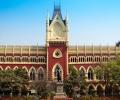
The Calcutta High Court has ordered the revival and prosecution of ten criminal cases related to murders in Nandigram and Khejuri during an anti-land acquisition movement in 2007. The court deemed the West Bengal government's decision to withdraw prosecution in these cases, involving the deaths of at least ten individuals, as unlawful. The bench emphasized that murders had indeed occurred and that allowing the prosecution to withdraw under Section 321 of the Criminal Procedure Code would not be in the public interest. The court stated that violence in any form should be eschewed in a democracy and that a state must exhibit zero tolerance towards it. The court set aside the state government's decision to withdraw prosecution and directed the public prosecutor to take appropriate measures within a fortnight.

He could have blazed a trail that few Indian judges had. It was a missed opportunity of a lifetime, notes Ramesh Menon.

The Supreme Court of India has asked DMK leader V Senthil Balaji to choose between his ministerial post in Tamil Nadu and his freedom. The court expressed concern over Balaji's reinstatement as a minister despite being granted bail in a money laundering case related to the "cash-for-job" scam. The court fears that Balaji's presence as a minister could influence witnesses in the case. The court has given Balaji until April 28 to make a decision.

The Supreme Court said on Tuesday it has to be alive to the fact that the concept of marriage has evolved and must accept the basic proposition that marriage itself is entitled to constitutional protection as it is not just a matter of statutory recognition.
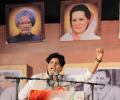
The Supreme Court of India has strongly criticized the police for suppressing freedom of speech by filing FIRs against artists for their performances, stating that mere recitation of a poem, stand-up comedy, or any form of art cannot be alleged to incite hatred or animosity between communities. The court quashed an FIR against Congress MP Imran Pratapgarhi, who was booked for a song performed at a mass marriage function, emphasizing that such actions stifle legitimate expressions of view in a free society.
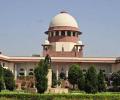
A three-judge bench headed by Chief Justice Justice (CJI) Sharad Arvind Bobde said that a larger bench will decide the pleas filed by 35 petitioners challenging Centre's decision.

Rule of law prevents a government, brought to power by the strength of ballots, from betraying the trust of citizens and "lapsing into a government of caprice, nepotism and finally despotism", the Supreme Court said on Thursday.
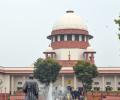
In a significant development, the Supreme Court on Tuesday asked the Election Commission of India to provide details of cases in which it had either removed or reduced the period of disqualification from electoral rolls of leaders post their conviction in criminal cases.

The "opaque" electoral bonds scheme for funding political parties will "destroy democracy" as it promotes corruption and does not allow a level playing field between the ruling and opposition parties, the petitioners challenging the validity of the scheme told the Supreme Court, which on Tuesday observed election funding was a "complicated issue".
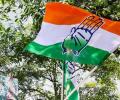
Sources said the Congress may consider opposing the bill when it is introduced in Parliament. The Aam Aadmi Party, which is in power in Delhi, has been seeking the support of various political parties on the matter.
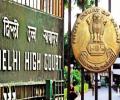
The Supreme Court collegium has initiated an initial inquiry against Delhi High Court judge Justice Yashwant Varma following the alleged discovery of a large stash of cash at his official residence during a fire incident. The collegium has also reportedly recommended Justice Varma's transfer to his parent high court, the Allahabad High Court. The inquiry will involve seeking a report from the Chief Justice of the Delhi High Court on the incident. The controversy surrounding the alleged discovery of cash was first reported by The Times of India. Justice Varma's proposed transfer is subject to the Centre's approval. The amount of cash found is not yet known. Justice Varma, currently heading a division bench dealing with sales tax, GST, company appeals and other appeals, did not hold court on Friday. Delhi High Court Chief Justice D K Upadhyaya expressed shock over the incident. The collegium reportedly received information about the cash discovery from government officials. Some collegium members have called for stricter action against Justice Varma, including seeking his resignation or launching an in-house inquiry. The Supreme Court has an in-house inquiry mechanism to deal with allegations against judges, which involves forming a committee to investigate and, based on the report, take further action. A judge of a constitutional court can only be removed through impeachment by Parliament.

The Supreme Court of India has directed all high courts, state governments, and union territories to ensure the availability of separate toilet facilities for men, women, persons with disabilities (PwDs), and transgender persons in all court premises and tribunals across the country. The court stressed the importance of public health and the right to privacy, stating that adequate public toilets protect women and transgender persons. The court also expressed concern about the condition of public toilets near toll plazas on national highways and emphasized the need for proper sanitation facilities in court premises for judges, advocates, litigants, and staff members. This decision highlights the importance of access to basic amenities in ensuring a fair and dignified justice system.
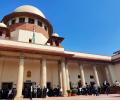
A bench of Justices Sanjiv Khanna and Dipankar Datta issued notice to the Centre on a plea filed by an NGO, Association for Democratic Reforms, and listed the matter along with other pending petitions on the issue for hearing in April.
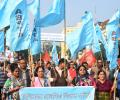
The Supreme Court of India has invalidated the appointment of 25,753 teachers and other staff in West Bengal's state-run and state-aided schools, deeming the selection process "vitiated and tainted." The court ordered the state government to conduct a fresh selection process within three months. The decision comes after a Calcutta High Court verdict in April 2024, which also annulled the appointments. The apex court, while upholding the high court's order, made some modifications, including exempting disabled employees from returning their salaries. The case stemmed from alleged irregularities in the 2016 recruitment process by the West Bengal School Service Commission (SSC), involving OMR sheet tampering and rank-jumping. The Supreme Court had previously termed it a "systemic fraud." Former West Bengal education minister Partha Chatterjee and Trinamool Congress MLAs Manik Bhattacharya and Jiban Krishna Saha are among the accused being investigated in the recruitment scam.

The matter is pending for a long time and it be listed before the appropriate bench on September 10, the bench said in a hearing conducted through video conferencing.

Justice Khanna, who will serve as CJI for a little over six months, will demit office on May 13, 2025.
 © 2026 Rediff.com - Advertise with us - Disclaimer - Privacy Policy - Sitemap - Feedback - About us - Terms of use - Grievances